Dental Implant Tooth Replacement — San Luis Obispo, CA
Dental implant options, including the hard cases
Board-certified oral surgery when you need a replacement for missing teeth. We help patients who have bone loss, implants that may have failed elsewhere, or patients who just want a healthier smile.
Overview
About Dental Implants
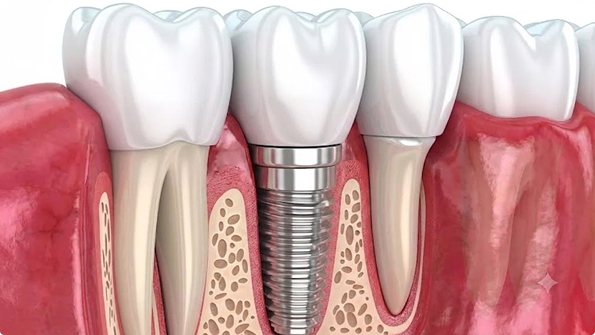
A dental implant replaces a missing tooth at the root. A small titanium post is placed in the jawbone, and once your jaw bone bonds with the implant, it can hold a custom crown that looks and works like a natural tooth. Unlike a bridge, an implant doesn’t lean on the teeth beside it, and it helps keep the jawbone from shrinking where a tooth went missing. Implants can replace a single tooth, several teeth, or anchor a full arch.
For patients with a dentist, prosthodontist, or referring provider, Dr. Janette’s role is to complete the surgical placement of the implant. Our office coordinates with your provider before and after surgery to ensure you get an optimized outcome.
For patients who don’t have a dentist, we can help you start the process and help you find a dentist close to you, accepts your insurance, or that you’ll connect with. This dentist will help complete the restoration of your dental implant.
Urgent? Call 805-541-5611
Candidacy & Indications
Am I a Candidate for Dental Implants?
Most adults missing one or more teeth are candidates. Our process includes finding out what’s happening in the bone underneath. If you’ve been told “no” before, that isn’t always the final answer.
You may still be a candidate even with:
- Significant bone loss. Bone grafting may be discussed before implant placement.
- A failed previous implant or teeth missing for years.
- Difficult anatomy near a nerve or the sinus.
Some patients arrive with, in their own words, “the most complicated mouth you could imagine”. That’s the work the team in the practice is trained to complete. We’ll tell you straight where you stand.
Our approach to dental implants
Dr. Adam Janette is a board-certified oral and maxillofacial surgeon, and a Diplomate of the American Board of Oral & Maxillofacial Surgery and a Fellow of the AAOMS. He completed his surgical residency at Northwestern, with comprehensive training in his specialty.
Complex implant cases are the core of our practice’s work. We work with bone loss, implants that failed elsewhere, terminal dentition, or anatomy that makes placement difficult. Most cases are planned using 3D scanning technology before surgery, so the implant goes exactly where the bone and your bite call for it.
Office Technology
The technology we use for dental implants
3D / CBCT imaging
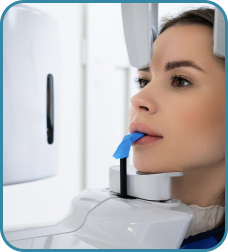
A cone-beam scan that shows your jaw in three dimensions, not a flat X-ray.
Why it matters: we see exactly where bone, nerve, and sinus are before we place anything. And we can show you.
IV anesthesia available in office
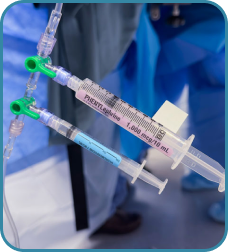
Our practice administers your IV anesthesia in-office, with the surgical team monitoring you throughout.
Why it matters: our team is thinking about both your comfort and your surgery.
3D printing
We print the surgical guide for your case here in the practice, from your own 3D scan.
Why it matters: the guide puts the implant exactly where it was planned, rather than freehand on the day.
What to Expect
How dental implant treatment works
Before: consultation & planning
Your first visit is often an evaluation Dr. Janette reviews your health history, examines the area, and takes a 3D scan to see the bone underneath. He’s able to explain what he sees in plain terms. You’ll learn whether you’re a candidate, whether you’ll need grafting first, and what the plan and a written estimate look like before you decide anything. Bring your medication list and every question you’ve got. If you’re nervous about dental work, say so. We can walk you through your questions during the visit.
During: placing the implant
Implant placement is an outpatient procedure. The area is fully numbed, and IV anesthesia is typically used to keep you comfortable. Working from the plan, Dr. Janette places the titanium post in the jawbone and closes the gum over or around it. Most patients tell us it was far easier than they’d braced for, and you go home the same day with clear instructions.
After: healing & the crown
For the first few days you’ll have some swelling and tenderness. We send you home with a plan to manage it. The implant then needs time for the bone to attach to it. We’ll see you for follow-ups and confirm it’s integrated, then coordinate the final crown with your dentist or prosthodontist.
Case Study
A recent case
Case Study · Dental Implants
Complex bone loss and a failed prior implant
[PROOF: one de-identified case — complex bone loss / failed prior implant → approach → outcome. Left bracketed until the case-study asset is built.]
Read the full case study →Recovery & Post-Op
Your first weeks after surgery
- Some swelling, mild bruising, and tenderness for the first few days. This is normal and manageable with the plan we send home.
- Keep to softer foods on that side while it heals.
- Follow the rinse and hygiene instructions closely.
- Full integration with the bone: as fast as 6 weeks, or as long as 6 months, depending on your case.
- These are general guides. Follow the specific post-op instructions Dr. Janette gives you.
When to call us
As with any oral surgery, contact the office for things like bleeding that won’t stop with gentle pressure, swelling that worsens after a few days, a fever, numbness that doesn’t fade, or an implant that feels loose. Follow the specific post-op instructions you’re given, and call the office with any concern.
Cost of dental implants
A single implant’s cost depends on whether you need bone grafting, sedation and other case factors. You’ll have a written estimate in hand at your consultation, before anything is decided.
Our office checks your dental benefits before your visit and gives you a clear estimate. If paying over time works better, we offer third-party financing. And if an implant isn’t the most sensible option for your situation, Dr. Janette will discuss that with you at your consultation.
See Cost of Dental Implants for a full breakdown →Frequently Asked
Questions patients ask us about dental implants
The area is fully numbed, and IV anesthesia keeps you comfortable, so the surgery itself is usually far easier than people brace for. Afterward there’s usually some soreness and we send you home with a clear plan to manage it.
From placement to final crown usually takes a matter of weeks, though it can range from about six weeks to six months depending on your site and anatomy. We’ll give you a timeline for your specific case.
That’s a common reason people end up here. Bone grafting can rebuild the area so an implant can be placed. Being told “no” isn’t the end of the story.
Most of the time, the answer is yes. An implant stands on its own without grinding down neighboring teeth, and it helps preserve the jawbone. However, it isn’t always the right call for everyone. Dr. Janette will tell you which options fit your case.
It varies with grafting, sedation, and the crown, so we put a real number on it at your consultation. Our front office checks your coverage ahead of time, and financing is available if you’d rather spread the cost.
Patient Experiences
Read dental implant patient reviews
“I have the most complicated mouth you could imagine with bone loss and terrible implants done [elsewhere]. But the doctor and staff are so incredibly kind.”
“I am having implants done and I have 100% confidence in Dr. Janette. His easy manner is assuring and his professional skill are evident by the results.”
Learn more
Implant topics in depth
Ready to talk through your case?
Request a consultation. CBCT imaging, clinical exam, and a written treatment plan with fee quote at your first visit.